

By William Miller
Climate at a Glance
Sioux Falls sits within a humid continental climate zone, marked by distinct seasons. Summers tend to be hot and humid, winters cold and dry. Average temperatures swing from daily highs near 84°F in July to lows around 0°F in the coldest winter nights. Annual snowfall totals average just over 45 inches, with precipitation most abundant during the warmer months. These patterns shape not just our wardrobes, but how we live and work in this corner of South Dakota.
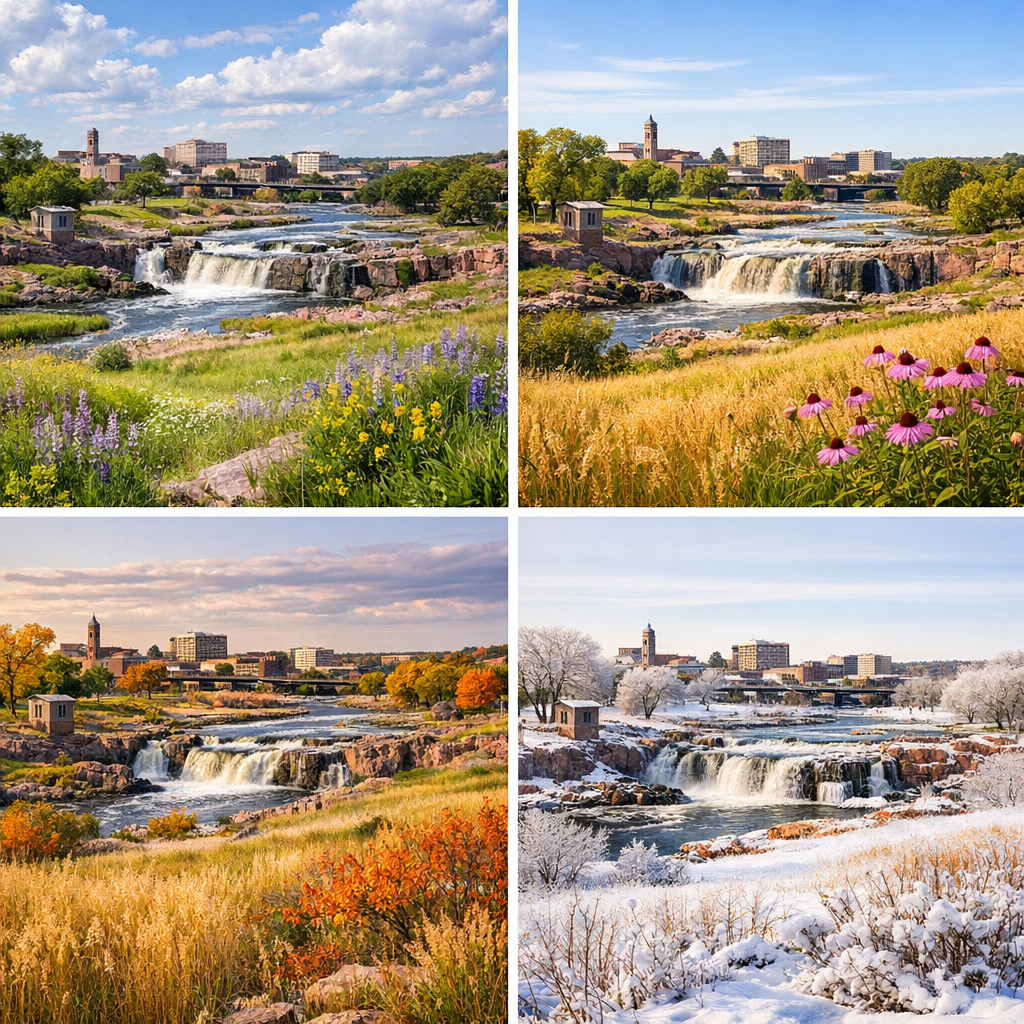
Seasonal Shifts and What They Bring
Spring & Autumn
Spring brings sharp transitions—melting snow, budding trees, and intermittent cold snaps. Daytime highs rise steadily, often pushing into the upper 50s to 60s°F. Autumn offers a mirror of this shift—cooling air, changing foliage, fewer storms. These are ideal times for yard work, planting perennials, or preparing gardens for winter.
Summer
Summers in Sioux Falls can be intense. High humidity combines with temperatures in the 80s°F and sometimes 90s°F. This is the peak for thunderstorms, which bring both relief and risk—localized flooding or hail are possibilities. Mornings and evenings are often more comfortable, so enjoying outdoor activity during these times helps avoid the worst of the heat.
Winter
Winters are long and cold. Snowfall is frequent but snowpack rarely persists continuously all winter. Strong cold fronts can drive temperatures well below zero, especially overnight. Wind chill often becomes a real concern. Knowing how to layer clothing and managing heated indoor spaces are essential parts of life through these months.
Climate Trends & Environmental Concerns
Climate change isn’t just distant news—it’s already influencing conditions locally. Recent assessments point toward warmer summers, milder winters, and shifting precipitation patterns. These shifts affect agriculture, water resources, and ecosystem health.
Key environmental topics around Sioux Falls include soil erosion and water quality degradation, especially when runoff from summer storms carries pollutants into streams and rivers. The state’s Watershed Protection Program focuses on nonpoint source pollution—diffuse sources that are harder to regulate but critical for preserving clean water.
Conservation efforts are ramping up across South Dakota. The 2025 Wildlife Action Plan emphasizes protecting habitats and partnering with landowners, agencies, and tribes to shield wildlife from threats like habitat loss and invasive species. Programs to restore riparian buffers—vegetated zones along water bodies—and control cedar encroachment (a concern for grasslands) are part of the response.
Practical Tips for Weather & Environment in Everyday Life
- Follow forecast trends: As summers heat up, watch for thunderstorm alerts and be prepared for sudden storms.
- Conserve water: Dry spells may become more common; efficient irrigation and water-conscious habits help.
- Plant smart: Native species tolerate temperature extremes and require less maintenance in our seasons.
- Snow readiness: Maintenance of snow removal tools and insulation in homes pays off during winter snaps.
- Stay engaged locally: Participate in watershed protection or conservation programs—local efforts make a difference.