

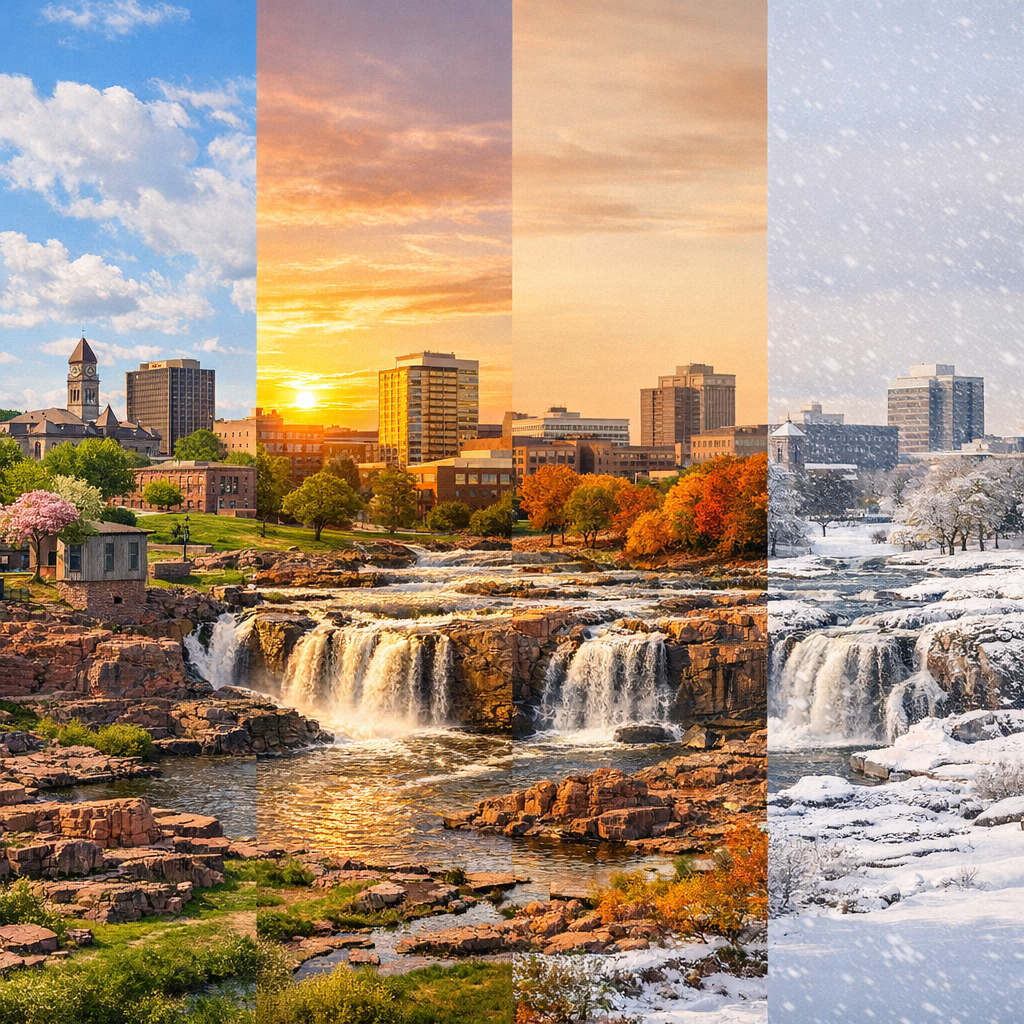
Sioux Falls, located in southeastern South Dakota, experiences a humid continental climate characterized by hot summers and cold winters. This climate type results in significant temperature variations throughout the year, influencing daily life and activities.
Seasonal Temperature Variations
Residents can expect the following average temperatures:
- Winter (December to February): Average highs around 26°F (-3°C) and lows near 8°F (-13°C).
- Spring (March to May): Highs ranging from 44°F (7°C) in March to 70°F (21°C) in May.
- Summer (June to August): Warm temperatures with average highs of 80°F (27°C) in June, peaking at 84°F (29°C) in July.
- Autumn (September to November): Gradual cooling with highs decreasing from 75°F (24°C) in September to 44°F (7°C) in November.
These fluctuations necessitate a versatile wardrobe and preparedness for sudden weather changes.
Precipitation and Snowfall
Sioux Falls receives an average annual precipitation of approximately 27.43 inches (697 mm), with the wettest months being June and July. Snowfall is common in winter, averaging around 38.1 inches (97 cm) annually. Residents should be prepared for snow-covered roads and potential travel disruptions during the winter months.
Environmental Considerations
Understanding the local climate is essential for environmental planning and conservation efforts. The city’s location in the Big Sioux River Valley means that spring snowmelt can lead to flooding. However, a diversion canal around the city helps mitigate this risk. Additionally, the region’s susceptibility to thunderstorms and occasional tornadoes during late spring and summer underscores the importance of staying informed about weather alerts and having emergency plans in place.
By staying informed about Sioux Falls’ climate patterns and environmental factors, residents can better prepare for the diverse weather conditions and contribute to the community’s resilience.