

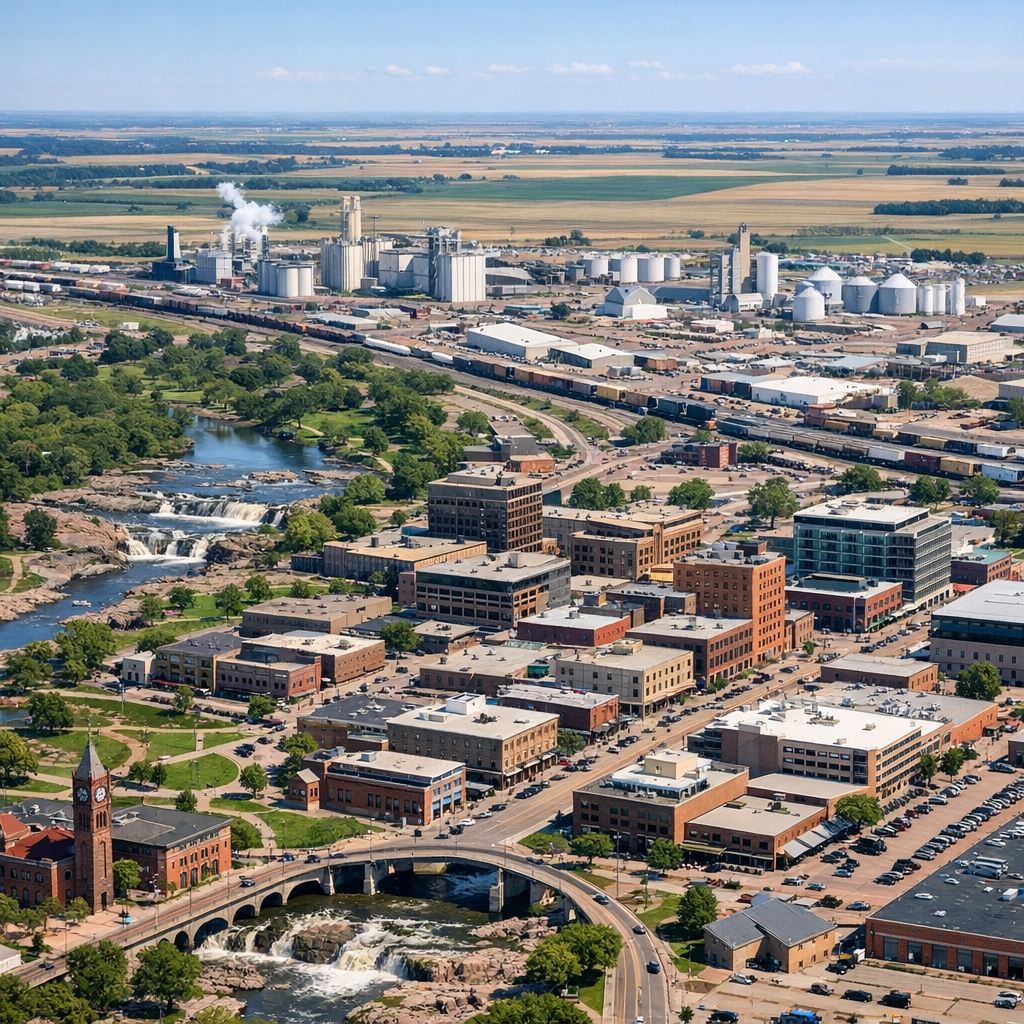
In an increasingly interconnected world, global trade policies and market dynamics have a profound impact on local economies, including that of Sioux Falls. Recent discussions among South Dakota’s economic leaders have highlighted the significance of these global factors on our community.
Tariffs and Trade Policies
At a recent Downtown Sioux Falls Rotary meeting, experts delved into the effects of tariffs and trade policies on South Dakota’s economy. Joe Santos from South Dakota State University and Jesse Fonkert, CEO of South Dakota Trade, emphasized that tariffs could potentially squeeze both consumers and businesses. They warned that retaliatory tariffs might slow job growth in key industries, creating uncertainty that could affect local economic stability. Source
Agricultural Exports
Agriculture remains a cornerstone of Sioux Falls’ economy. The 2025 Midwest Agricultural Export Summit, held in Sioux Falls, focused on addressing the agricultural trade deficit. Discussions centered on how farmers and producers can navigate global market challenges to achieve profitability. The summit underscored the importance of local solutions and strategies to enhance the competitiveness of South Dakota’s agricultural exports. Source
Bioscience and Innovation
Sioux Falls is also making strides in the bioscience sector. The USD Discovery District’s participation in the 2026 Medical Alley Summit highlights the city’s growing role in bioscience innovation. This involvement not only showcases local advancements but also fosters national and international collaborations, positioning Sioux Falls as a hub for bioscience development. Source
Looking Ahead
As global trade dynamics continue to evolve, it’s crucial for Sioux Falls to stay informed and adaptable. Engaging in discussions, fostering innovation, and developing local strategies will be key to navigating the challenges and opportunities presented by the global economy.