

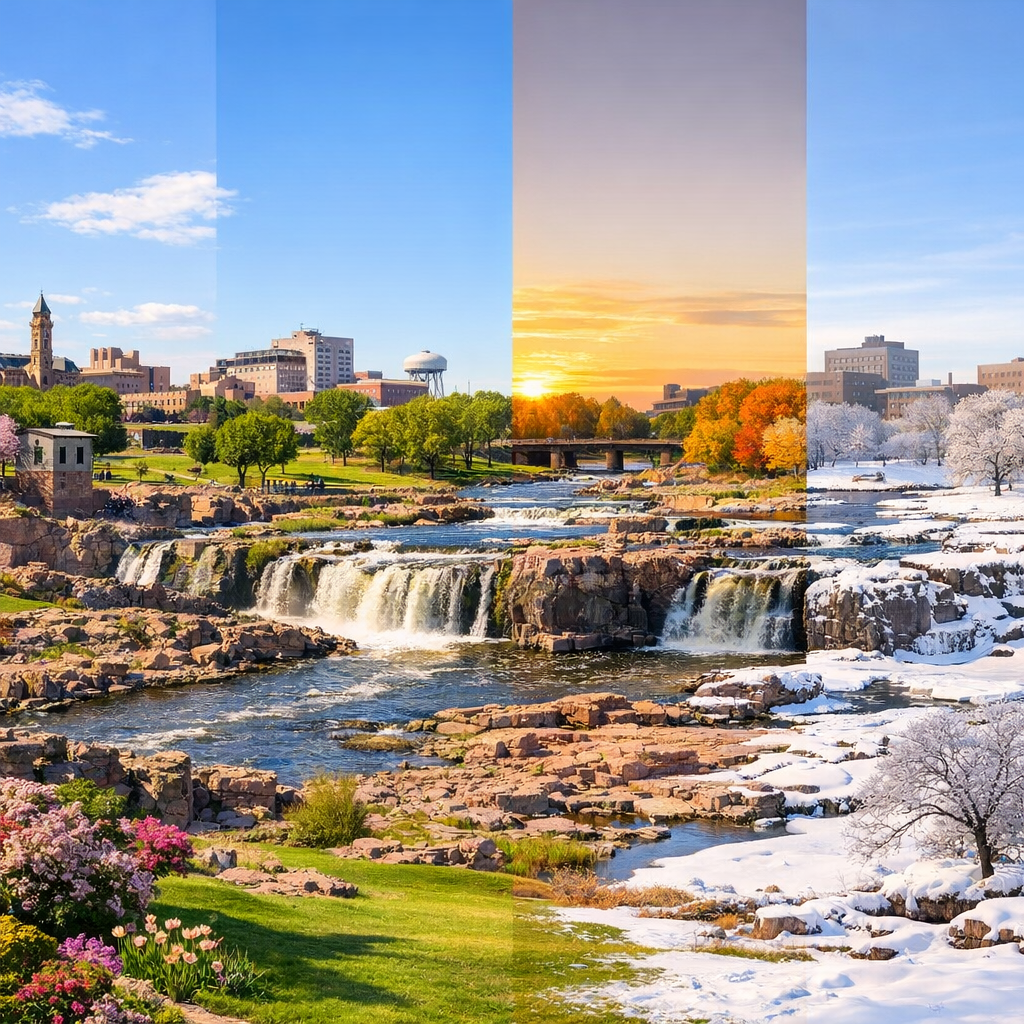
Sioux Falls, located in southeastern South Dakota, experiences a humid continental climate characterized by hot summers and cold winters. This climate results in significant seasonal variations, offering residents and visitors a diverse weather experience throughout the year.
Winter: Cold and Snowy
Winters in Sioux Falls are typically cold and snowy. Average low temperatures in January hover around 6.5°F (-14.2°C), with highs reaching approximately 25.0°F (-3.9°C). Snowfall is common, averaging about 38.1 inches annually. Residents should be prepared for occasional blizzards and strong winds that can lead to abrupt temperature drops.
Spring: Warming Temperatures and Increased Precipitation
Spring brings a gradual warming trend. By April, average high temperatures rise to around 56.7°F (13.7°C), with lows near 34.0°F (1.1°C). This season also sees an increase in precipitation, averaging 2.95 inches in April. Thunderstorms become more frequent, and the risk of flooding from melting snow runoff is mitigated by a diversion canal around the city.
Summer: Warm and Humid
Summers are warm and humid, with July being the hottest month. Average high temperatures in July reach 83.6°F (28.7°C), while lows are around 62.0°F (16.7°C). Precipitation is relatively high during this period, with June averaging 4.56 inches. Thunderstorms are common, and residents should remain vigilant for severe weather events, including tornadoes.
Autumn: Cooling Temperatures and Decreasing Precipitation
Autumn sees a gradual decrease in temperatures and precipitation. By October, average high temperatures drop to 60.1°F (15.6°C), with lows around 36.8°F (2.7°C). Precipitation averages 2.33 inches in October. This season offers a comfortable climate, making it a pleasant time for outdoor activities.
Climate Trends and Considerations
Sioux Falls’ inland location and latitude contribute to its significant temperature fluctuations and diverse weather patterns. The city is situated in USDA Plant Hardiness Zone 5a, indicating that gardeners should select plants that can withstand minimum temperatures between -20°F to -15°F.
Understanding these seasonal patterns is essential for residents and visitors to prepare appropriately for the varying weather conditions throughout the year.