

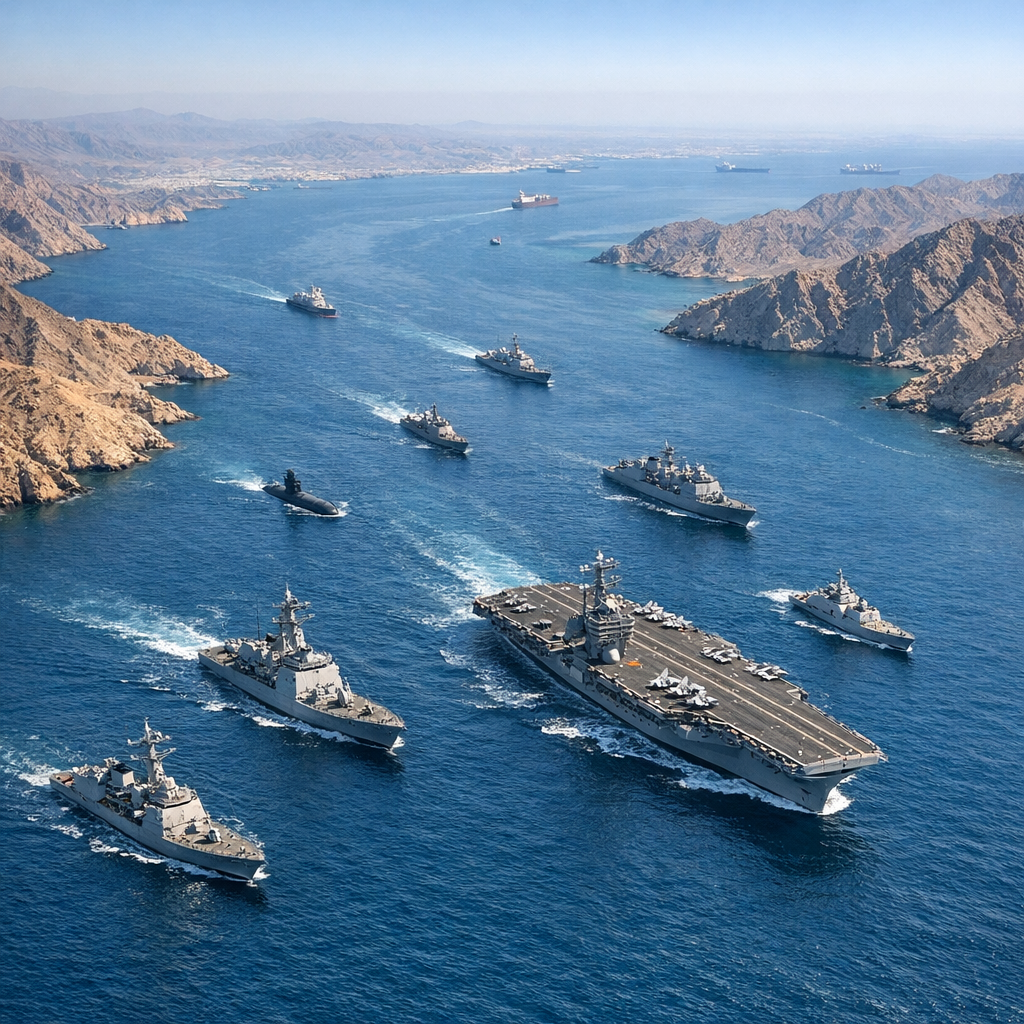
Recent developments in the Strait of Hormuz have once again brought U.S.-Iran relations into the global spotlight. Reports indicate that both nations have engaged in military actions over this strategic waterway, raising concerns about regional stability and international peace prospects.
The Strategic Importance of the Strait of Hormuz
The Strait of Hormuz is a narrow passage connecting the Persian Gulf to the Arabian Sea. It is one of the world’s most crucial maritime chokepoints, with a significant portion of global oil shipments passing through it daily. Control over this strait is vital for both economic and strategic reasons.
Recent Escalations
According to reports, the United States and Iran have recently engaged in military confrontations over the Strait of Hormuz. These incidents have heightened tensions and cast a shadow over ongoing peace negotiations between the two nations.
Implications for Global Peace
The current escalation is primarily driven by strategic interests, with both nations seeking to assert their influence over the region. Analysts suggest that these sporadic incidents reveal deep mistrust and divisions, potentially dimming the prospects for a genuine return to peace in the region.
Conclusion
As the situation unfolds, it is crucial for the international community to monitor these developments closely. The stability of the Strait of Hormuz has far-reaching implications, not only for the nations directly involved but also for global economic and security interests.