

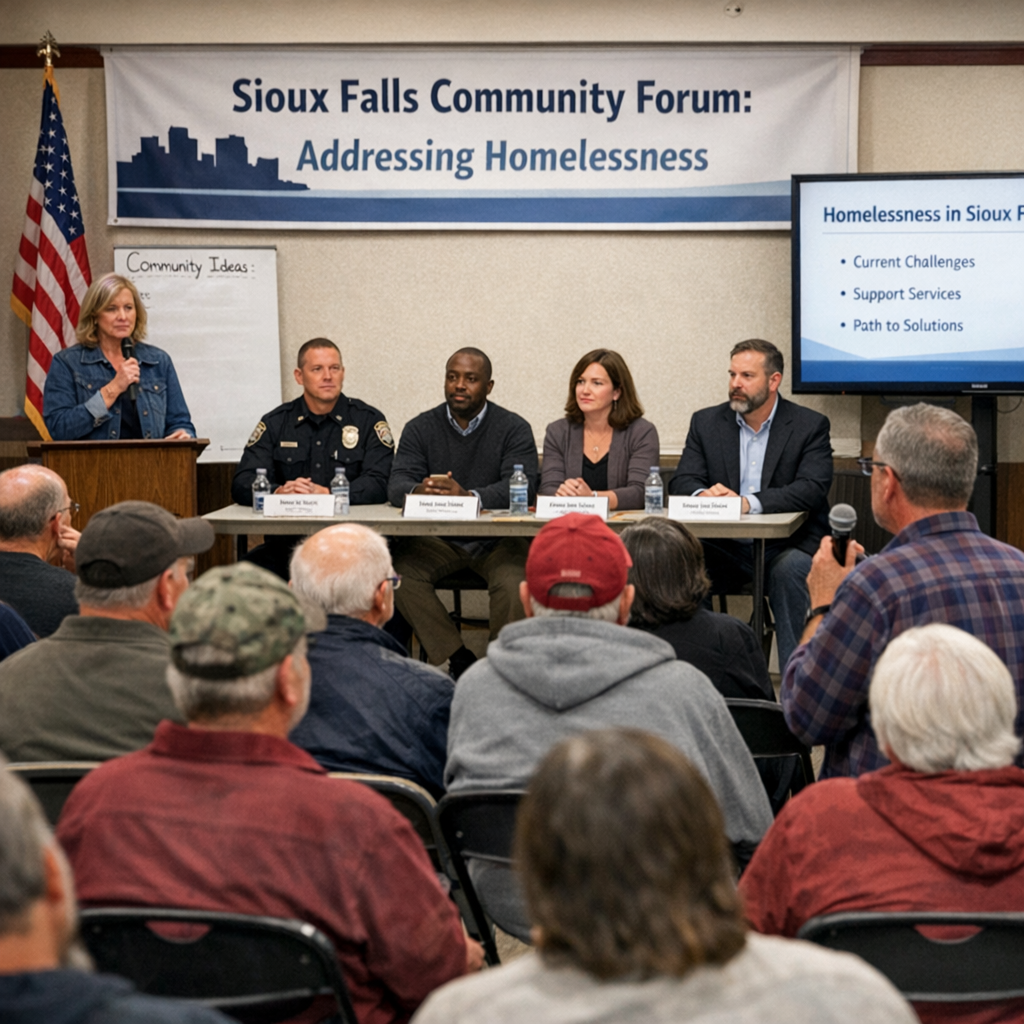
Homelessness remains a pressing issue in Sioux Falls, prompting city officials and community organizations to implement various strategies aimed at providing support and solutions. A notable initiative is the ‘Cash Handouts Don’t Help’ campaign, launched to encourage residents to contribute to local service providers rather than giving directly to individuals on the streets. This campaign has sparked diverse reactions within the community.
Critics argue that the funds allocated for the campaign could be more effectively used to directly assist those in need. Melaney Sohm, a Sioux Falls native, expressed her concerns, stating, ‘We’re supposed to help the homeless. We’re supposed to help the poor. To me, that is a very cold sign that we can’t help them.’
In response, Sioux Falls Homelessness Services Coordinator Michelle Treasure highlighted the campaign’s role within a broader, multifaceted approach to addressing homelessness. She noted that since the campaign’s introduction, there has been a 50% decrease in calls for service to the downtown area, and 14 individuals experiencing chronic homelessness have been sheltered, thanks to partnerships with organizations like South Dakota Urban Indian Health.
Beyond public campaigns, the city collaborates with Minnehaha County and various non-profit organizations to provide comprehensive support. Efforts include increasing the supply of affordable housing, with 75 new affordable housing units completed in 2024 and plans for 377 new units in 2025. Additionally, the annual Point in Time Count offers insights into the local homeless population, with 625 individuals counted in early 2025.
Community members interested in supporting these initiatives are encouraged to volunteer or donate to established service organizations, ensuring that resources are effectively utilized to assist those in need.
Addressing homelessness in Sioux Falls is a complex challenge that requires ongoing collaboration, compassion, and community engagement. By working together, residents and officials can continue to develop and implement strategies that provide meaningful support to those experiencing homelessness.